

In the liquefied petroleum gas (LPG) and cylinder manufacturing industry, one of the most technical queries we receive from commercial distributors is whether standard domestic gas cylinders can legally and safely support small-scale commercial kitchens or cafeterias.
While it might seem like a cost-effective setup on paper, transitioning hardware from a residential kitchen to a commercial food-service environment requires a strict evaluation of capacity, continuous vaporization rates, and regional safety compliance. Let's break down the technical realities.
1. The Core Challenge: Commercial Demand vs. Domestic Capacity
The primary bottleneck when introducing standard household cylinders-such as 5kg, 6kg, or 7kg LPG variants-into a cafeteria is the sheer volume of gas consumption.
(1)High-Flow Requirements:
Cafeterias utilize heavy-duty, commercial-grade burners designed to heat large quantities of food rapidly.
(2)The Frosting Effect (Vaporization Deficit):
Small domestic cylinders have a limited surface area. When a commercial burner draws gas at a high rate continuously, the liquid LPG inside cannot vaporize fast enough. This causes the cylinder temperature to plunge, leading to frosting on the cylinder wall, a dramatic drop in pressure, and weak, inefficient burner flames.
While a compact LUZHEN 5kg Cooking Gas Cylinder or 9kg lpg cylinder is engineered perfectly for controlled residential cooking or outdoor catering, a high-traffic cafeteria will deplete these units within hours, causing frequent, hazardous cylinder changeovers that disrupt peak-hour operations.


2. Structural Safety and Advanced Protection Features
Cafeterias are heavily regulated public spaces. Consequently, the safety standards for their gas distribution systems are exponentially higher than those for single-family homes.
A common misconception is that all LPG cylinders offer identical safety tolerances. In reality, commercial applications demand robust reinforcement at the cylinder's most vulnerable zone: the neck ring and valve assembly.
For instance, in rigorous markets like Brazil and neighboring South American regions, safety protocols require an extra layer of thermal defense for high-utilization environments. To meet this specific demand, specialized 13kg LPG cylinders (P13) feature an advanced Cylinder Neck Ring engineered with a dedicated, threaded port for a fusible plug (plug fusível).
How it works: If a kitchen fire or extreme ambient heat occurs, the low-melting-point alloy within the fusible plug melts at a certified temperature threshold. This initiates a controlled, safe release of gas pressure, preventing a catastrophic thermal explosion (BLEVE) in a crowded cafeteria environment.

3. Regulatory Compliance and Best Practices
Before deploying any gas setup in a commercial cafeteria, consulting local safety authorities (such as ABNT, INMETRO, DOT, or ISO regional bodies) is mandatory. In many jurisdictions, operating commercial food services with undersized residential cylinders is a direct violation of fire codes, which can lead to severe legal liabilities and voided insurance policies.
However, for small-scale, rural cafeterias or temporary kiosks with minimal cooking hours, a medium-capacity setup utilizing robust, properly regulated cylinders can serve as an interim solution-provided that:
High-capacity, commercial-grade pressure regulators are installed.
The cylinders are securely anchored via their neck rings in a well-ventilated, external enclosure.
Leak detection systems and regular technical inspections are strictly enforced.
Conclusion: Partner with a Certified Manufacturer
Ultimately, while small household cylinders are the unsung heroes of daily family cooking, they are rarely equipped to handle the relentless demands of a commercial cafeteria. For commercial operations, stepping up to a high-capacity, legally compliant cylinder-such as a 13kg or larger commercial lpg gas cylinder equipped with specialized safety neck rings-is always the superior investment.

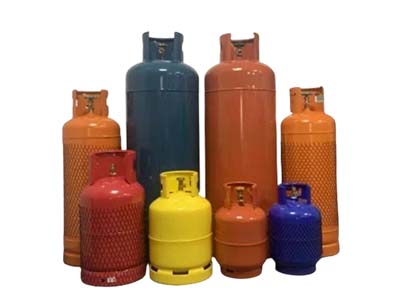
Whether you are sourcing standard domestic cylinders for a distribution network or looking for customized, region-specific LPG hardware featuring integrated safety ports, LUZHEN LPG Cylinder Company provides precision-engineered, fully certified solutions.
Contact our engineering and sales team today to discuss your regional specifications, and let us help you find the safest, most efficient hardware for your market.
References
ISO 4706: Gas cylinders - Refillable welded steel cylinders.
ABNT NBR 8460: Regulamento técnico para recipientes transportáveis de GLP (Brazil).
NFPA 58: Liquefied Petroleum Gas Code for Commercial Kitchens.